The feeling is real, but what is it telling you?
Some connections begin before the story has had time to form. You meet, exchange a few words, and something in you goes still. The person seems familiar. Their voice lands close to home. You may feel you have known them before, even when you know almost nothing about their life. Other bonds begin with a different charge. You cannot stop thinking about them. Every message feels loaded. A pause feels like a sign. The connection takes up space in your body before it has earned space in your calendar.
Both experiences matter. Neither deserves to be mocked or brushed aside. Astrology gives you a language for the difference. Familiarity often belongs to the Moon, Venus, the Sun, and contacts to the Ascendant or Descendant. These symbols speak to comfort, attraction, recognition, and the way one person fits into another person's emotional or relational pattern. Intensity can come through Mars, Pluto, Uranus, Neptune, or a difficult contact that keeps the emotional weather moving. The chart may show why an encounter wakes you up. It cannot turn one person's feeling into two people's choice.
That last sentence is the hinge of the reading. A soulmate connection, in the lived sense, is not only an encounter that changes you. It is a bond in which two people can meet the meaning of the encounter together. The bond may be romantic, committed, unfinished, or brief. The form can change. The need for mutual presence does not.
The first practical question is not whether the feeling is extraordinary. It is what the feeling does once ordinary life enters. Does it make room for curiosity, honesty, and steadiness? Or does uncertainty become the main source of the charge? That difference will guide the reading that follows.
A useful way to hold the question is to separate three clocks. The first is the clock of recognition, which can stop at the first meeting and still feel complete. The second is the clock of intensity, which speeds up during distance, uncertainty, sex, conflict, or sudden revelation. The third is the clock of trust, which moves slowly because it measures what happens again and again. Astrology can illuminate all three, but only the third clock tells you whether the connection has learned how to live in time.
This distinction protects the sacred quality of the experience. You do not have to reduce a profound meeting because it does not become a conventional partnership. Nor do you have to call a relationship permanent because it feels sacred. Let the meaning be large enough to include both truth and limit. The person may be a soulmate in the sense that the meeting recognizes a deep part of your path. The future still depends on what the two of you do with that recognition.
That is a gentler and firmer way to read the stars. You honor the meeting without handing it your judgment. You let love be mysterious, but you ask it to become honest in daylight.
Sources: Synastry: Love and Relationship Astrology; Synastry: Moon-Saturn Aspects; Synastry
What a serious reading actually needs
You do not need a soulmate label before you begin. You need usable chart inputs. A synastry reading compares two natal charts. For each person, the cleanest scope includes the date of birth, the exact local time of birth, and the place of birth. The time matters most for the Ascendant, Descendant, houses, and the Moon when it is near a sign boundary. Without it, you can still read many planets by sign and degree, but you should not present uncertain angles or houses as settled facts.
Astrodienst describes synastry as a comparison in which the planets from one chart are set against the planets and chart points in the other. It can show interaspects and house placements. The method belongs to relationship astrology, but it is not limited to lovers. That wider use is helpful here because it keeps you from treating every strong contact as a marriage promise. A chart can show why someone is important without saying what role they must play forever.
The second layer is the composite chart. Astrodienst describes it as an average or midpoint chart made from the two natal charts, with the result read as a chart of the partnership itself. In the language of relationship astrology, it gives the bond a third shape. It can describe what the two of you create when you enter the same field: the purpose, mood, strain, or task of the relationship. It does not replace the two individual charts, and it does not erase the fact that one person may be more ready than the other.
A responsible reading also names its method. You might say: I am reading natal synastry by major aspects, personal planets, angles where birth times are reliable, and Saturn or nodal contacts as supporting themes. I am not calculating a percentage, declaring a fixed fate, or assigning a personal placement that has not been calculated. Precision makes the spiritual reading stronger. It tells you which part comes from the chart and which part is the interpretation you are making from the life in front of you.
Birth time also changes the emotional temptation of a reading. When an angle is uncertain, it is easy to choose the version that best matches the story you want. A careful reader keeps the claim at the level the data can carry. If the Moon changes sign that day, say that Moon-based conclusions are conditional. If the birthplaces are known but the times are not, focus on planets and close degree aspects, then leave houses and the Ascendant aside. You lose drama. You gain a reading you can trust.
The same care applies to timing. A natal synastry chart describes the pattern between two people. Transits describe a period that may activate a pattern. The date you met can add another layer, and a composite chart can describe the relationship field. These are different questions. Is the bond meaningful? How does it operate? Why is this month so charged? Keep them separate before you weave them together. That sequence stops one vivid moment from carrying the weight of an entire life.
Read the chart as a set of priorities, not a courtroom verdict. A close personal-planet contact deserves more attention than a loose, dramatic aspect that appears nowhere else in the pattern. A repeated theme matters more than a single symbol. If tenderness appears through Moon-Venus, supportive Mercury contacts, and a workable Saturn connection, you have several ways to understand closeness and maintenance. If Pluto appears alone, let it describe the depth of the encounter without making it carry the whole relationship. Then ask whether daily life repeats the same theme. A chart that speaks of care should meet care in the calendar. A chart that speaks of friction should help you name the exact conversation being avoided. This is how interpretation stays both rich and accountable: you follow the strongest pattern, note what complicates it, and test the reading against what the relationship actually does.
Sources: Synastry; The Composite Chart; What's Your Sign? An Intro to Synastry Charts and Astrological Compatibility; Birth Charts for Beginners: Four Things You Need to Know
Moon and Venus: the signature of familiarity
When people ask why a connection feels like home, I look first toward the Moon and Venus. The Moon carries the private body of feeling: what soothes you, what you need when you are tired, and what makes closeness feel safe. Venus carries attraction, affection, taste, pleasure, and the values you bring into love. When one person's Moon touches the other person's Venus, the bond can feel naturally kind. One person needs something the other instinctively knows how to offer.
Cafe Astrology describes Venus-Moon contacts as creating familiarity, tenderness, and a desire to spend time together. That is a useful description of recognition because it distinguishes being drawn to someone's presence from being consumed by their absence. You may not need drama to feel the bond. You can sit in the same room. You can share food, errands, silence. The connection has a pulse even when nobody is performing it.
Sun-Moon contacts add another kind of recognition. The Sun person may feel seen in their direction and identity, while the Moon person may feel emotionally received. The contact can create the impression that your inner life and the other person's way of being belong in the same room. Ascendant contacts can make the first meeting instinctive. A personal planet on the Descendant can describe qualities you naturally seek in a partner. These are meaningful layers, especially when the contacts are close by degree and supported elsewhere in the chart.
But familiarity has a shadow. You can mistake ease for agreement. You can also use comfort to avoid the conversation that would reveal whether your values match. Cafe Astrology makes this point in its discussion of Venus-Moon aspects: charm can smooth over a real problem, but a glossed-over problem still weakens emotional trust. So ask what happens after the warm beginning. Do you understand one another better, or do you simply know how to recreate the first feeling? Recognition opens the door. It does not furnish the house.
Notice how the Moon and Venus show up in ordinary scenes. The Moon asks whether you can be unguarded when you are sick, tired, or disappointed. Venus asks whether affection survives a difference in taste, pace, money, or manners. A conjunction or trine may make those moments easier, but ease is not the whole reading. A square may make the languages of care different. One person offers solutions while the other wants tenderness. The work is not to find the perfect aspect. It is to learn the translation.
If you want to test recognition, remove the spotlight. Meet in a setting that carries no romantic theater. Pay attention to the quality of silence, the way you handle a small change of plan, and whether you remain curious when the other person is not especially charming. Familiarity that deepens in plain life has roots. Familiarity that exists only in charged rooms may be memory, projection, or longing borrowing the face of certainty.
Sources: Synastry: Love and Relationship Astrology; Synastry: Moon-Saturn Aspects
Mars, Pluto, Uranus, and Neptune: when the bond gets loud
Intensity has its own astrological vocabulary. Venus-Mars contacts can create unmistakable physical attraction. Mars brings desire, pursuit, heat, anger, and the urge to act. The attraction may feel immediate because the relationship activates the body before the mind has made a case for it. That can be a gift. It can also make every difference feel erotic, urgent, or strangely important.
Pluto takes the volume higher. Venus-Pluto contacts are often experienced as magnetic and transforming. You may feel that the person reaches a hidden place in you. Separation can bring jealousy or fear. The difficult forms can produce a cycle of idealization, conflict, reunion, and renewed hunger. This does not make the love false. It tells you the bond is working on deep material. The work still needs a container.
Uranus can make a meeting feel like a lightning strike. The person breaks your pattern, wakes up a future you had forgotten, or arrives when your old identity is ready to change. Neptune can make the connection tender, spiritual, and difficult to see clearly. You may love what the person awakens in you before you know whether you love the person as they actually are. Cafe Astrology describes Venus-Neptune contacts as evolving over time, with reality gradually asking the first enchantment to become more honest.
The useful test is not how loudly the bond announces itself, but what happens after the peak. If a person is warm only when you are almost leaving, the charge may be real while participation remains thin. If conflict brings more truth, care, and accountability, the heat may be serving intimacy. If it brings punishment, disappearance, or repeated confusion, no dramatic signature asks you to endure the pattern.
Ask what the intensity makes possible. Does it help you become more present and more willing to know the whole person? Or does it make you monitor every pause and abandon your own center? The first can mature into devotion. The second keeps the relationship organized around the next emotional hit.
Neptune is especially important in this distinction because it can make the unseen feel more vivid than the seen. You may sense a soul bond before you have enough shared facts to know the person. Let time reveal whether the image can survive contact with reality. The question is not whether the dream was beautiful. It is whether the person becomes more lovable as the dream gives way to a human being with limits, habits, history, and choices.
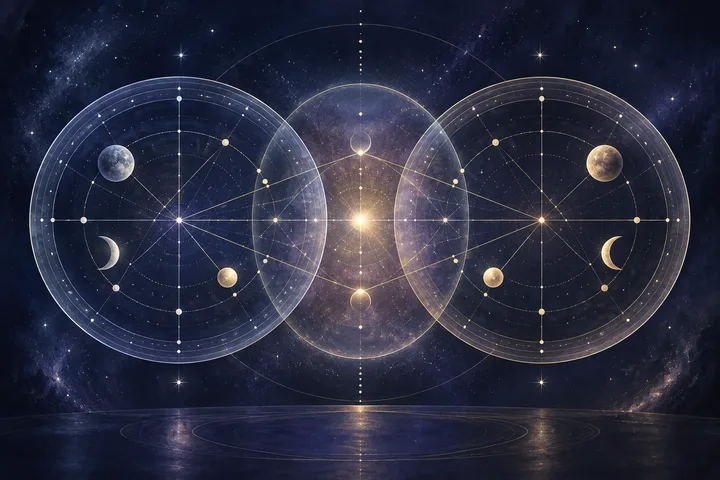
Recognition and intensity can arrive together, but they are not the same message. In astrology, Moon and Venus contacts often describe familiarity, tenderness, and the feeling that you can settle beside someone. Mars, Pluto, Uranus, or Neptune can raise the voltage. Those signatures may be beautiful, consuming, and life-changing. They still describe the force of the encounter, not a promise that both people will choose the same future. To ask whether the bond can last, read the charts in layers. Start with synastry, using both people's exact birth dates, birth times, and birthplaces when available. Then look for the relationship's larger pattern through a composite chart, which is calculated from the two natal charts. Finally, compare the symbolism with what is happening between you: Do you both name the connection? Do your actions match your feelings? Can you repair a hurt without making the hurt part of the romance? My strongest answer is simple. Treat recognition as an invitation to pay attention. Treat mutual participation, repair, and shared direction as the evidence that gives the invitation a life.
Sources: Synastry: Love and Relationship Astrology; What's Your Sign? An Intro to Synastry Charts and Astrological Compatibility
The chart can show a bond without promising a future
This is where many soulmate readings go astray. Someone sees a nodal contact, a Vertex connection, Pluto on an angle, or a powerful composite signature and jumps from significance to permanence. The leap feels natural. If the encounter changed your life, surely the person must stay in it. But astrology gives you more than one kind of meaning. A relationship can arrive to awaken desire, reveal a wound, teach a boundary, deepen your capacity for truth, or become a lasting partnership. Significance does not come in only one shape.
The strongest chart is also not the same as the easiest relationship. Cafe Astrology treats Saturn as a binding force that can support commitment, but its descriptions of hard Moon-Saturn and Venus-Saturn contacts also name pressure, inhibition, criticism, and the fear of being trapped. That is the important exception. A serious-looking bond can last because both people grow into responsibility. It can also last because fear, duty, or dependency keeps them in place. Longevity by itself is not the highest good.
The same principle applies to a light chart. A relationship with easy Venus, Jupiter, or Moon contacts may feel generous and kind, yet still meet a practical limit. One person may want children while the other does not. One may be ready to move while the other has built a life elsewhere. A chart of affection cannot negotiate a future that the people involved refuse to discuss.
Consider this example. Maria and Daniel have exact Moon-Venus warmth and a demanding Saturn contact. The pattern explains why they keep returning to one another and why the relationship feels serious from the start. Maria wants a defined partnership. Daniel says the bond matters, but keeps the future vague. The reading should not crown the connection. It should name the choice in front of them: can Daniel participate in the structure the relationship requires, and can Maria stop mistaking his feeling for his decision?
Astrology is strongest when it preserves the difference between potential and enactment. Potential is not a lesser word. It names a real opening, a capacity, or a pattern that could become conscious. But potential asks for consent and work. A Saturn contact may offer the capacity to endure. It does not mean endurance is always wise. A Neptune contact may offer spiritual tenderness. It does not mean confusion should be protected. Pluto may offer deep change. It does not make possession holy.
This is why a chart can be meaningful after a relationship ends. The symbolism may continue to describe what the meeting changed in you. You might understand your needs, your boundaries, or your way of loving differently because the person arrived. The ending does not cancel the meaning. It may be the consequence that lets the meaning become yours instead of leaving it attached to a promise the other person never made.
Sources: Synastry: Love and Relationship Astrology; Synastry: Moon-Saturn Aspects; Synastry
The missing test is mutual participation
A soulmate feeling can be one-sided. That does not make the feeling foolish. It means the meaning currently lives in one person's experience. You may feel recognition while the other person feels attraction, friendship, fear, or nothing they are willing to name. No chart can remove that difference. Synastry describes the relationship between charts, but a relationship in life still needs two people to show up. The tenderness of your perception deserves respect, and so does the other person's freedom to answer honestly.
Look for participation in small, repeatable acts. Does the other person make room for your reality, not only your most appealing qualities? Do they ask questions and remember the answers? Do plans survive the first difficult week? Are you allowed to want clarity without being told that asking for clarity ruins the magic? Mutuality is not a grand declaration. It is a pattern of response.
This is also where the chart's roles matter. One person may carry the Moon contact and feel the bond through emotional safety. The other may carry Venus and experience it through affection or beauty. One may feel Pluto's depth while the other feels threatened by its demand for honesty. Astrology can explain why two people experience the same contact differently. It cannot force them to translate those experiences into a shared agreement.
Make the reading concrete by recording three observations: what feels familiar, what keeps the bond electrically alive, and what the other person repeatedly does with that feeling. The first two observations describe the experience. The third tells you whether the experience has become a relationship. When that last column stays blank, name the connection honestly. It may be meaningful, but it is not yet mutual in practice.
Participation has a quiet grammar. It sounds like I want to understand, I can make room, I was wrong, and here is what I will do differently. It looks like a plan kept after the excitement fades. It includes the other person's interior life, even when that life complicates the romance. You do not need perfection. You need evidence that both people can be moved by what the relationship reveals and can respond without making one person carry the whole bond.
If the connection is not yet defined, do not use astrology to define it by yourself. Let the chart suggest questions you can bring into an honest conversation. Ask whether the other person experiences the bond as romantic, what they are available for, and what they are not offering. Their answer may disappoint you. It also returns power to reality, where a meaningful connection can either receive a shared name or be honored without being forced into one.
Mutual participation includes the right to move at different speeds without making one person's pace the law for both. You can respect their uncertainty and still set a limit for your own heart. You can care deeply and decline a half-relationship. That is not a failure of faith in the bond. It is faith in the truth that love must include you, too.
Sources: Synastry; The Composite Chart
Repair tells you more than chemistry does
Every important relationship will disappoint you at some point. The question is not whether the connection contains conflict. The question is what the two of you do with the wound after it appears. A bond can have exquisite synastry and still fail under pressure. Another can carry hard aspects that become a school for patience, honesty, and mature love. The chart shows the material. Repair shows how you handle it.
Start with the first rupture. What happened, in plain language? Did someone withdraw, lie, criticize, break an agreement, or fail to protect the relationship? Then ask what followed. Did the person name the harm without turning the conversation into a defense of their intentions? Did they change a behavior? Did you both make a new agreement and keep it when the emotional weather cleared? An apology matters. A changed pattern matters more.
Saturn is useful here because it asks what can hold weight. In Moon-Saturn contacts, Cafe Astrology describes a pull toward responsibility and constancy alongside the risk of emotional censorship or isolation. That is a precise picture of the test. Can the relationship make room for need without making need shameful? Can commitment create safety without becoming control? A Saturn bond becomes trustworthy when responsibility moves in both directions.
Neptune and Pluto deserve the same honest treatment. Neptune may invite forgiveness, but it can also blur a repeated breach. Pluto may invite transformation, but it can also turn power struggles into proof of passion. Do not let a dramatic reunion settle a problem that still has no plan. The lasting version of a soulful bond is not conflict-free. It is capable of returning with more truth than it had before.
Repair also has a timing problem. The person who caused the hurt may want immediate forgiveness because the intensity of the rupture is uncomfortable. The person who was hurt may need time before trust can move again. A real repair can hold both facts. It does not demand that the injured person perform peace to prove the love is spiritual. Nor does it keep the wound alive as permanent pressure. It names what happened, allows the feeling, and builds a different next step.
Watch the difference between reunion and repair. Reunion restores contact. Repair restores safety. You can have the first without the second, especially in a bond with strong Pluto, Neptune, or hard Saturn signatures. The return may feel overwhelming because the attachment is deep. Ask what has actually changed before you call the return a new chapter. If the answer is nothing, the relationship is repeating its lesson, not completing it.
Sources: Synastry: Love and Relationship Astrology; Synastry: Moon-Saturn Aspects
Can this connection last? Read the shared direction
Lasting love needs more than a strong beginning. It needs two lives that can move in a compatible direction. That does not mean you must share every taste, habit, or ambition. Venus can enjoy difference. Mars can keep desire alive. The Moon can create a private home inside the relationship. But the bond needs agreement on the questions that shape its future: commitment, fidelity, children, money, home, distance, care, and the amount of truth you can speak without punishment.
The composite chart can help you name the field you create together. Astrodienst describes it as a chart of the partnership, not simply a report on what one person feels about the other. Read that distinction carefully. The composite may show a relationship organized around learning, travel, service, family, public work, privacy, or deep transformation. It may also show where the partnership carries strain. A meaningful bond can have a difficult purpose. That does not make it doomed. It tells you what the relationship asks you to practice.
Now compare that symbolism with the actual shape of your days. If the chart suggests a bond that needs steadiness, are you building routines that create it? If the relationship thrives on honest conversation, can you speak before resentment gathers? If the connection is powerful but unstable, what would stability require from each of you? Ask for a concrete answer. The future becomes visible through repeated choices, not through the most beautiful interpretation of the past.
A couple can have a composite chart that emphasizes home, devotion, or transformation and still need to settle practical questions. Who will move? How will money work? What does exclusivity mean? When one answer stays vague, the symbolism has identified a live theme, not supplied consent. A shared future begins when both people can answer the question in the same room.
Shared direction does not require identical personalities. In fact, some of the most vital relationships contain lively difference. The issue is whether the difference can live inside an agreement. Two people can have separate callings and still choose loyalty. They can need different amounts of solitude and still protect closeness. They can argue about style while agreeing on the values that govern the home. What matters is not sameness. It is a future neither person has to betray themselves to enter.
Use the chart to ask where the future will need care. A strong fourth-house or Moon emphasis may make home and emotional safety central. Saturn may ask for patience, duties, and a clear container. Uranus may require freedom and a less conventional structure. Neptune may ask for shared spiritual meaning but clear practical agreements. Pluto may make joint finances, sexuality, or power impossible to ignore. These themes are not verdicts. They are the rooms where the relationship must learn to speak.
Shared direction also includes timing. Two people can love one another and still stand in different seasons of life. One may be ready to make the bond public while the other is grieving, rebuilding, or finishing an old chapter. That difference deserves compassion, but compassion cannot become an endless waiting room. Ask what is possible now, what could become possible later, and what would need to change for that later to arrive. A clear timeline is kinder than a beautiful fog.
When the answers align, ordinary life becomes part of the spiritual meaning. The grocery list, the hard family call, the move, the illness, and the quiet Tuesday all become places where the bond takes form. This is why the question can last matters so much. You are not only asking whether the connection is rare. You are asking whether its rarity can survive repetition. The right relationship does not need every day to feel like a first meeting. It needs enough truth to make the days worth returning to.
Sources: Synastry; The Composite Chart
How to use the reading without losing yourself
A chart reading should return you to your life with better questions. It should not make you wait at the edge of someone else's indecision, explain away every hurt, or search for one magic aspect that settles the matter. Begin with the birth data and method. Separate what the chart clearly describes from what you are inferring. Then put the interpretation beside the relationship's history. A symbol that does not meet lived reality needs a slower reading.
Write three short sentences. This connection feels familiar because... This connection feels intense because... This relationship is becoming trustworthy when... The first sentence points toward Moon, Venus, Sun, angles, and the emotional language of the bond. The second points toward Mars, Pluto, Uranus, Neptune, and the places where desire or uncertainty takes over. The third sentence is yours to complete from evidence. No planet gets to complete it for you.
Next, name one behavior you need to see. Not a mood. Not a sign. A behavior. Perhaps you need the person to make a clear plan, tell the truth about another relationship, return to a hard conversation, or agree on what commitment means. Ask for it directly and listen to the answer in words and actions. A soulful connection can survive a clear request. In fact, clarity gives a real bond room to deepen.
If you want a fuller reflection, use the Connection Reflection Report to explore the layers together. Bring the question you actually live with, not only the label you hope to receive. Recognition matters. Intensity matters. But the reading reaches its strongest conclusion when it helps you see what the two of you are choosing now.
You can also revisit the reading at three points instead of demanding one final answer. Read the chart when the bond is beginning and ask what is waking up. Read the relationship after the first disappointment and ask what the attraction can hold. Read it again after a real choice has been made and ask whether the shared pattern is becoming more conscious. The same aspect may speak differently as the people living it grow. That is not inconsistency. It is the difference between a symbol and a sentence.
Keep one part of the reading outside the romance. Stay close to your friends, work, body, prayer, art, or daily rituals. A soulful bond should deepen your life, not require you to abandon every other source of meaning while you wait for its answer. When you remain rooted, you can meet the connection with an open heart and a clear mind. You can recognize what is sacred without surrendering your ability to choose.
Then begin the conversation the reading has prepared you to have. Choose a calm moment, not the middle of a reunion or an argument. Say what you feel, but do not stop there. Say what you want, what you can offer, and what you need to know about the other person's direction. Leave room for an answer that is not the one you hoped for. A connection with real depth can face reality. A fantasy needs reality to stay away.
The most honest conclusion may be yes, not yet, or no, and each answer can carry meaning. Yes asks for a shared plan. Not yet asks for a boundary around waiting. No asks you to bless what was true and release what cannot become mutual. In every case, the stars have done their part by giving language to the meeting. Your next choice gives the language a life.
Sources: Synastry; The Composite Chart
A little more clarity
Can emotional intensity prove that someone is my soulmate?
No. Intensity can show that a connection is activating desire, fear, transformation, or longing, and astrology can help describe those patterns. It does not prove that both people share the same meaning or future. Read intensity beside mutual participation, repair, and shared direction. Those are the signs that give a powerful connection a sustainable form.
Sources & further reading
- Synastry: Love and Relationship Astrology
Supports the interpretations of Moon-Venus familiarity, Venus-Mars attraction, Venus-Uranus excitement, Venus-Neptune idealization, Venus-Pluto intensity, and Mars contacts with Neptune or Pluto.
- Synastry: Moon-Saturn Aspects
Supports the tension between emotional safety, responsibility, censorship, distance, attachment, and possible longevity in Moon-Saturn synastry.
- Synastry
Supports the definition of synastry as a comparison of two or more horoscopes and its use for interaspects and relationship dynamics.
- The Composite Chart
Supports reading the composite as a third factor that describes the relationship's own pattern rather than one person's feelings alone.
- What's Your Sign? An Intro to Synastry Charts and Astrological Compatibility
Supports the practical discussion of natal-chart comparison, aspect orbs, Sun-Moon, Moon-Venus, Venus-Mars, angles, and Saturn in long-term relationship interpretation.
- Birth Charts for Beginners: Four Things You Need to Know
Supports the chart-input scope: birth date, birth time, birth location, houses, planets, and aspects, including why uncertain time affects houses and angles.
Complete Connection Meaning Report
Eighteen private reflections become a complete 12-section reading of recognition, mutuality, repair and your possible future.
Explore my connection