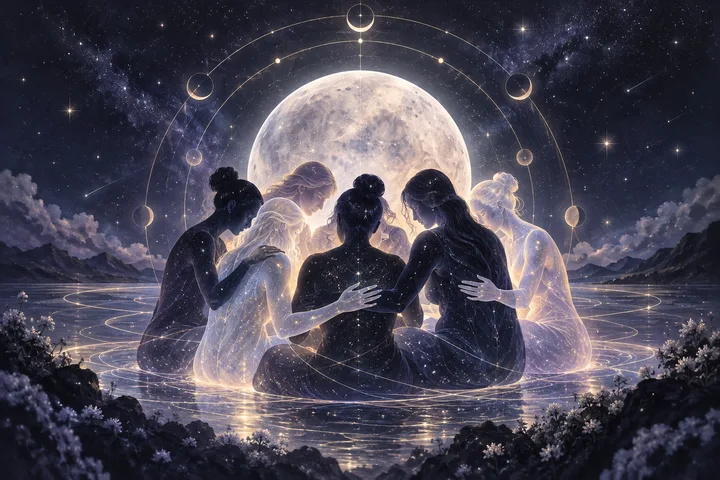
Imagine recognizing someone in the middle of loss
Imagine Maria meeting Daniel at a grief group after each has lost a parent. They don't arrive looking for romance. They arrive tired. They know the strange hours, the unopened messages, the way a familiar song can make a normal afternoon impossible. One of them speaks about anger. The other doesn't rush to soften it. That restraint feels intimate. Within weeks, they can sit in silence without explaining why.
The feeling is not simply attraction. It is recognition. Maria doesn't have to translate the part of grief that makes her leave a party early. Daniel doesn't have to pretend that healing moves in a straight line. They meet in a place that most people avoid, and because they share that place, the relationship seems to carry its own history. It can feel older than it is.
Now consider the question underneath the feeling. Are they recognizing each other, or are they recognizing their own pain in another person? Those experiences overlap, but they aren't identical. Shared suffering can open a door. It can also make the door look like a home before either person has tested the rest of the house.
This is why a connection born through grief deserves a careful reading. The tenderness may be genuine. The familiarity may be sacred. Still, the bond has to become more than a private language of loss. Can Maria tell Daniel she needs a quiet evening without fearing abandonment? Can Daniel receive good news without feeling that joy betrays the people they lost? Can they make plans that do not depend on staying wounded together?
The astrological question is just as precise. Which part of the chart describes the recognition, and which part describes the work of staying? The Moon speaks to memory, instinct, and the need for emotional shelter. Pluto can draw buried feeling to the surface and make a relationship feel transformative. Chiron can show where closeness touches an old wound and offers a chance to meet it differently. Saturn can give the bond weight, duty, and endurance. None of these symbols says that grief has chosen a permanent partner for you. They show what the relationship is asking you to handle.
There is a particular kind of recognition that comes when neither person has to make the other feel better at once. They can sit with the unfinished sentence. They can let tears arrive without turning them into a performance or a problem to solve. That pause may be the first sign that the relationship has more than shared circumstances. Still, notice whether the pause leads to understanding. Silence can be a shelter, but it can also hide fear. Over time, a durable bond learns when to be quiet and when to speak plainly. It remembers the loss without asking every new moment to resemble it.
What the Moon recognizes before the mind catches up
In synastry, the Moon is often where recognition arrives first. It describes the emotional body: the habits you return to under pressure, the memories that shape your instincts, and the kind of care that lets you soften. When one person's Moon strongly contacts the other person's personal planets, the relationship can feel familiar before it has earned familiarity through time. You may know how to sit beside each other before you know how to plan a weekend together.
Astrodienst describes synastry as a comparison of two charts, including the aspects between planets and the houses where one person's planets fall in the other person's chart. Its relationship guidance gives personal-planet contacts a compelling quality, while Saturn contacts can add stability and security to a long-term bond. That gives us a useful starting point. The chart describes the places where two people meet. It doesn't erase the difference between a first recognition and a lived history.
A Moon-Moon contact can feel like shared weather. You may respond to a funeral, a family call, or a difficult anniversary with a similar rhythm. You may need the same kind of quiet. You may understand why the other person becomes practical when overwhelmed, or why they need to tell the story several times before it settles. This can create the relief of being met without performance.
A Moon-Venus contact adds tenderness and the wish to soothe one another. Cafe Astrology describes Moon-Venus synastry through affection, mutual support, cooperation, and the pleasure of sharing space. That matters in grief because presence often carries what words cannot. Someone who brings food, remembers the date, or sits through the same story may feel more loving than someone who offers a perfect explanation.
But Moon recognition has a shadow. Two people can share an emotional reflex and still reinforce it. If both withdraw when afraid, silence may feel respectful at first and punishing later. If both anticipate loss, reassurance may become a daily demand. If one person treats sadness as proof of depth, the other may feel guilty for recovering. The same Moon connection that says, I know what this feels like, can also say, You must feel it exactly as I do.
Read the Moon through behavior. Do you feel safer after difficult conversations, or only more attached? Can each person name a need without making the other person responsible for curing it? Does comfort leave room for laughter, sleep, work, friends, and pleasure? A meaningful Moon connection should widen the emotional home. It shouldn't turn grief into the only room where the relationship can breathe.
This is also why recognition can arrive before attraction has a clear name. The Moon does not need a grand romantic scene. It notices whether your nervous system settles near someone, whether your private habits feel welcome, and whether the other person understands the difference between comfort and intrusion. In a new bond, that ease can feel like a return. Let it be a beginning. Ask what happens when one person is cheerful, distracted, ambitious, or simply unavailable. The relationship's emotional truth includes those states too. Familiarity becomes trustworthy when it survives more than one mood.
Shared grief can create a rare kind of recognition. You may feel that this person understands the room inside you that other people keep missing. In astrology, that feeling often belongs to strong Moon contacts, Moon-Pluto intensity, Chiron links, or Saturn ties that make two people feel responsible for one another. But recognition is not the same as permanence. A bond can begin in pain and still remain one-sided, controlling, or unable to imagine ordinary life. The strongest reading is this: shared healing matters more than shared damage. Look for two people who can speak about what happened, respect different ways of mourning, and show up when the crisis is over. A synastry chart can describe the emotional pattern, but your next answer comes from the relationship itself. Ask whether you are building safety together, not only recognizing each other’s wounds. Then ask what future you can both choose.
Sources: Synastry - Astrodienst Astrowiki; Synastry: Moon-Venus Aspects Between Charts | Cafe Astrology
Why Moon-Pluto recognition can feel impossible to forget
Shared grief often brings the Moon-Pluto pattern into view, whether or not the charts contain a close Moon-Pluto aspect. The Moon carries the private life. Pluto reaches toward what is hidden, feared, or powerful. When they meet in synastry, one person may feel that the other can see beneath the story. The bond can become a place where old pain rises quickly, sometimes before either person has decided whether the relationship is safe enough to hold it.
Cafe Astrology describes Moon-Pluto synastry as a relationship theme of managing the deep feelings the two people arouse in each other. Easier aspects can support focus, resilience, and a shared ability to regenerate after difficulty. Harder aspects may bring fear of loss, jealousy, control, projection, and power struggles. This is not a verdict against the connection. It is a warning about what intensity needs from both people.
Imagine Maria telling Daniel that the anniversary of her mother's death is approaching. He wants to help, so he clears his schedule and asks to be included in every part of the day. She appreciates his care, then feels watched. He hears her request for one afternoon alone as rejection. She hears his questions as pressure. Their grief is shared, but their way of carrying it is not. The Moon-Pluto lesson is not that one of them loves more. It is that love cannot use fear as its proof.
Pluto can make a connection feel fated because it changes the emotional scale. A short conversation may open a subject you have avoided for years. A look can carry a history that the calendar does not support. You may feel more alive, more exposed, and more determined to protect the bond. That can be a genuine encounter with depth. It can also make ordinary evidence seem too small. A text missed during a busy day suddenly feels like a sign. A boundary feels like betrayal. A disagreement becomes a referendum on the whole connection.
The better question is what the depth produces. Does the relationship make truth easier to tell? Does it help both people release control? When one person becomes afraid, can the other stay present without surrendering freedom? Moon-Pluto can help two people face grief honestly, but the healing depends on consent. Nobody should have to disclose more, stay closer, or sacrifice more in order to prove that the bond is real.
There is an important difference between emotional penetration and emotional safety. Pluto may reveal the buried material. Safety decides what happens next. If the relationship responds to revelation with patience, privacy, and repair, intensity can become transformation. If it responds with surveillance, punishment, or tests, the same intensity becomes a trap. The recognition may be real. The relationship may still be wrong for a shared future.
A useful Moon-Pluto reading therefore tracks power as closely as feeling. Who gets to define what the grief means? Who decides when the conversation is over? Who is allowed to change? If one person's vulnerability becomes the other's permanent authority, the bond has confused exposure with intimacy. Healthy depth works differently. It lets both people remain complex. You can know someone's deepest fear and still respect their privacy. You can be moved by their history and still accept their no. The connection grows stronger when intensity no longer needs control to feel secure.
Sources: Synastry: Moon - Pluto Aspects Between Two Charts | Cafe Astrology; Karma & Relationships | Cafe Astrology
Chiron shows the wound, but not a promise to heal it
Chiron gives shared healing its most recognizable astrological language. In myth and modern interpretation, Chiron is linked with the wound that becomes a source of wisdom and care. In synastry, a Chiron contact can make one person feel seen at the exact place where they expect rejection. You may tell someone about a loss you usually hide, and their response does not make you smaller. They don't turn away. They don't turn the story into a lesson too soon.
Astrology.com describes Chiron as the wounded healer and connects the 7th house with partnership, long-term relationships, and marriage. Its discussion of Chiron in a relationship setting emphasizes vulnerability and the possibility that one person helps the other feel safe enough to open. Cafe Astrology likewise associates Chiron interaspects with an urge to help and heal, while cautioning through its broader synastry material that difficult contacts can bring old wounds into present reactions.
That distinction matters. Chiron does not mean that one person is the doctor's cure and the other is a damaged patient. It describes a tender threshold. The connection may show you where you still expect abandonment, where you hide your needs, or where you confuse being useful with being loved. The other person may help you see that pattern. They cannot do the inner work in your place.
Consider an example. After a shared bereavement, Maria starts managing every practical detail. Daniel lets her because he knows she is capable. Over time, she feels needed but not known. When she finally asks for care, she apologizes for asking. A Chiron theme may be active here: the old wound says love comes when she performs strength. Healing begins when she risks receiving without turning the moment into another task.
The same pattern can reverse. Daniel may become the person who is always forgiven because his grief is visible. Maria starts swallowing her frustration. She believes compassion requires silence. It doesn't. Chiron healing includes the truth that a tender person can still cause harm, and a wounded person can still owe repair. If the relationship cannot hold accountability, it is not healing. It is only making the wound more meaningful.
Look for the ordinary signs of a useful Chiron bond. Can you say, That hurt me, and remain connected? Can the other person apologize without asking you to comfort them? Do you leave hard conversations with more self-respect, not less? Can you outgrow the role the relationship first gave you? Healing changes shape. If the bond needs you to remain fragile so it can remain special, it has stopped serving the wound it once revealed.
Chiron also asks whether the relationship can outlive its first rescue story. Perhaps you met when one person needed a hand and the other knew how to offer it. Later, the roles may reverse. Later still, neither person may need rescuing. That change is good. If the bond weakens when both people become steadier, it was attached to imbalance. If it deepens, the original wound has done something generous: it has introduced two people who can now meet as equals. Healing is not a permanent identity. It is the freedom to stop organizing love around what hurt you.

Sources: Chiron in 7th House: Natal, Synastry, Return | Astrology.com; Karma & Relationships | Cafe Astrology
Saturn decides whether recognition can carry a life
If the Moon recognizes and Chiron opens the wound, Saturn asks what happens on Tuesday. It is the planet of time, limits, duty, and the structures that hold a promise after the feeling changes. In a connection shaped by grief, Saturn can feel serious from the beginning. You may sense that this person matters before you know what the relationship is. You may move carefully because both of you understand that love has consequences.
Cafe Astrology describes Saturn in synastry as restrictive and binding, but also connected with familiarity, safety, commitment, and long-lasting relationships. Its wider discussion of karmic relationships calls Saturn contacts supportive or challenging, often both. This is the right way to read the symbol. Saturn can help a relationship endure. It can also keep people together through fear, guilt, habit, or an old promise that no longer fits.
Shared grief can create an instant duty. One person becomes the only one who understands the other person's history. The relationship starts carrying a private memorial, a family story, or a promise made during crisis. That responsibility may be beautiful. It becomes heavy when either person believes leaving the relationship would mean abandoning the dead, betraying the healing, or proving that the love was never real.
Imagine Maria and Daniel six months later. The acute grief has eased. They have jobs, friends, bills, and different needs for rest. Daniel wants to spend the anniversary together. Maria wants to travel with her sister and return the next day. A Saturn test appears. Can they honor the bond without turning one ritual into a loyalty exam? Can they make a durable plan that includes separate obligations? Endurance is not measured by how much freedom they surrender.
Saturn also reveals whether care has a shape. A lasting connection needs agreed rhythms: how you handle anniversaries, how you ask for space, how you repair after a harsh exchange, and how you speak about money, home, family, or the future. Grief may have introduced the couple, but shared life requires a wider vocabulary. The bond has to make room for growth that is not caused by pain.
Watch for Saturn's stronger expression. Both people keep promises. Both can say no. Both accept that the relationship will change as they change. One person's maturity does not become the other's authority. The past receives respect, but it does not rule every present decision. Saturn makes recognition credible when it turns feeling into reliable action. Without that action, the connection may remain profound and still fail the test of time.
Saturn's timing can feel slow, especially after an intense beginning. That slowness is useful. It lets you see whether promises survive fatigue, distance, disappointment, and the return of ordinary responsibilities. A person may be magnificent beside you at the memorial and absent when you need to discuss a bill or a boundary. Another may need months before they can name commitment, then prove it through steady acts. Don't confuse speed with sincerity, or delay with wisdom. Watch the pattern. Saturn reveals character through repetition.
Sources: Saturn in Synastry | Cafe Astrology; Karma & Relationships | Cafe Astrology
The strongest exception: when the grief is shared, but the future is not
Here is the exception that keeps this reading honest. Two people can share a deep loss, show real tenderness, and still not be able to build a life together. Recognition may be mutual. Healing may be genuine. The future can remain incompatible.
This happens when the bond is strong in the crisis layer but weak in the choice layer. You understand each other's sorrow, but you want different homes. You can comfort each other, but one person wants children and the other does not. You share a spiritual language, but you cannot agree about money, fidelity, location, or how much of the relationship should be public. The grief is not false. It simply does not answer every question a life together will ask.
Pluto can make the bond feel too important to release. Chiron can make separation seem like the abandonment of a healing mission. Saturn can make duty sound like destiny. None of those symbols should be used to overrule a clear mismatch. A relationship that asks you to betray your own future is not proving its depth. It is asking you to pay for intensity with your life.
The opposite exception matters too. A relationship may have no dramatic grief story and still carry a deep, lasting recognition. Shared healing does not require a shared tragedy. Two people can meet through ordinary kindness, then build the safety that lets old pain soften. The chart may show quiet Moon-Venus care, constructive Saturn, or supportive Jupiter contacts rather than a storm of Pluto and Chiron. Peace does not make the connection less meaningful.
This is where competing interpretations become useful. The first interpretation says, We suffered together, so we belong together. The second says, We found each other in suffering, so we can help each other recover. The second is stronger because it leaves room for choice. It honors what happened without making pain the contract. It also explains why some soulmate connections last after the first rush: the people keep choosing one another when they no longer need the relationship to prove that they survived.
Use a simple test. If the grief vanished tomorrow, what would still connect you? Name three things. Perhaps you share humor, values, work, faith, curiosity, or a way of caring for family. Then name three things you would still need to negotiate. Perhaps you disagree about commitment, privacy, children, distance, or money. That comparison separates recognition from projection. The bond can be sacred and still require a decision.
Use a second test beside it. When one person has a good week, does the other move closer, stay steady, or become strangely distant? Shared healing can make room for relief. A crisis-bound bond may need sadness to feel needed. Notice what happens when the old story loosens: do you discover new subjects, new rituals, and new forms of desire, or do you keep reopening the wound because nothing else has been named? This isn't a demand for constant happiness. Grief returns, and some seasons are heavy. The question is whether the relationship can hold more than one emotional climate. A bond that can welcome joy without losing tenderness has a wider future than one that treats joy as disloyalty.
Sources: Karma & Relationships | Cafe Astrology; Synastry: Moon - Pluto Aspects Between Two Charts | Cafe Astrology; Saturn in Synastry | Cafe Astrology
The conversation that tells you what this connection means
Recognition is the beginning of the answer, not the answer itself. The Moon may describe familiarity, Pluto the depth of feeling, Chiron the tender wound, and Saturn the test of time. The relationship still has to make those symbols livable.
Choose a calm day and ask, What are we building now that the original pain is no longer the only thing bringing us together? Listen for a shared direction. It might be a clear next step, a slower pace with a date to revisit it, or the honest admission that one person wants comfort while the other wants commitment. Warmth matters. Direction matters more.
Make the answer visible in one small agreement. Decide how you'll handle the next anniversary, request for space, family gathering, or hard week. Who initiates contact? What does support look like? How will you repair it if one person pushes too hard or goes quiet? A single practice won't settle the future, but it will show whether both people can learn together.
Then watch what happens outside the grief story. Can each person keep friends, work, family, rest, and joy without treating independence as betrayal? Can you remember the loss without turning it into leverage? Shared healing leaves both people more able to tell the truth. It doesn't require either person to stay fragile, monitored, or indebted.
Three answers deserve different names: yes, we're building a relationship; not yet, but I want to explore it; or I don't want that future. Don't turn the second into the first, and don't turn the third into a secret yes because the connection feels sacred. A bond can be spiritually important and still be practically wrong. Meaning isn't measured only by duration. It can also be measured by the freedom and honesty the connection makes possible.
If you want a fuller view of the pattern between your charts, [explore my Connection Reflection Report](/compatibility-test). Bring this question with you: what are we building now? The report can help you reflect on recognition, mutual participation, repair, and a shared future. Its clearest answer will still come from what both people choose and repeat in daily life.
Sources: Karma & Relationships | Cafe Astrology; Saturn in Synastry | Cafe Astrology
A little more clarity
Does shared grief prove that two people are soulmates?
No. Shared grief can create genuine recognition and a powerful healing bond, but it does not guarantee permanence. Look for mutual care, respectful boundaries, repair after conflict, and a future both people can name. In synastry, Moon, Pluto, Chiron, and Saturn may describe the emotional pattern, while the relationship's repeated choices show whether that pattern can become a life together.
Sources & further reading
- Synastry - Astrodienst Astrowiki
Defines synastry as chart comparison and explains how personal, outer, and Saturn contacts can shape compelling or stabilizing relationship themes.
- Karma & Relationships | Cafe Astrology
Supports the interpretation of Saturn, Chiron, and Pluto interaspects as themes of duty, healing, power, and repeated relationship patterns.
- Synastry: Moon - Pluto Aspects Between Two Charts | Cafe Astrology
Supports the comparison of Moon-Pluto aspects with deep feeling, resilience, fear of loss, projection, jealousy, and power struggles.
- Chiron in 7th House: Natal, Synastry, Return | Astrology.com
Supports Chiron's wounded-healer symbolism and its relationship with vulnerability, partnership, and the possibility of healing through connection.
- Saturn in Synastry | Cafe Astrology
Supports Saturn's themes of commitment, familiarity, restriction, control, growth, and the need to test whether a bond remains healthy over time.
- Synastry: Moon-Venus Aspects Between Charts | Cafe Astrology
Supports Moon-Venus themes of tenderness, mutual support, cooperation, affection, and the ease of sharing everyday space.
Complete Connection Meaning Report
Eighteen private reflections become a complete 12-section reading of recognition, mutuality, repair and your possible future.
Explore my connection